
Hey everyone, Aaron here, Founder of Attributer.io.
I’ve been a Community member for a while now, and spotted a few people using URL parameters and getting stuck with some tracking scenarios, so
One of the things I love about Typeform is that UTM/source tracking is built right in. In your form’s Settings, you can enable Source tracking / URL parameters and configure fields like utm_source, utm_medium, utm_campaign, and more. When someone arrives at your form with those parameters in the URL, Typeform automatically captures them with the response. It’s a great first step.
It can get tricky when your visitors browse around before they convert. Someone clicks a Google Ad, lands on your homepage, then later navigates to your Contact page where your typeform is embedded. By the time they actually submit the form, the UTM parameters are no longer in the page URL, so Typeform has nothing to read and the UTM fields are empty.
The more robust solution is to capture the UTM parameters the moment someone first lands on your site, store them in the visitor’s browser (for example, using cookies or local storage), and then pass them into the form as URL parameters when it’s loaded or submitted. That way, even if a visitor browses around your site before converting, you still get the original UTM data in the Typeform response.
You can write custom code on your website to handle this capture-and-store logic, and then attach the stored UTMs to the Typeform URL. But you’ll need to test and maintain that code over time.
As an easy alternative, we built Attributer.io to handle this automatically. Attributer is a small script you add to your website. When a visitor lands on your site, it captures the UTM parameters and stores them in the visitor’s browser. Then, when they complete a form, Attributer writes those values into URL parameters on your Typeform and the full UTM data is captured with the submission.
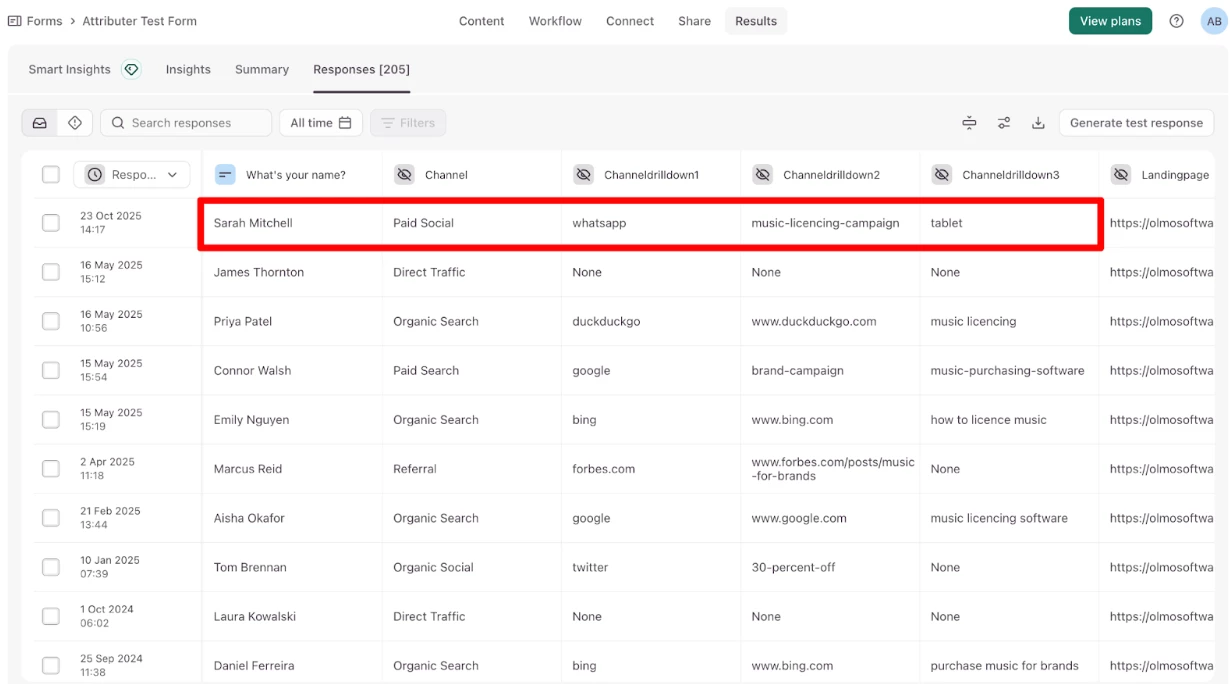
Attributer also captures information on leads that come from organic channels (like Organic Search, Organic Social, Referral, Direct, etc). This means you can see where ALL your leads are coming from, not just those from your paid ads with UTM parameters.
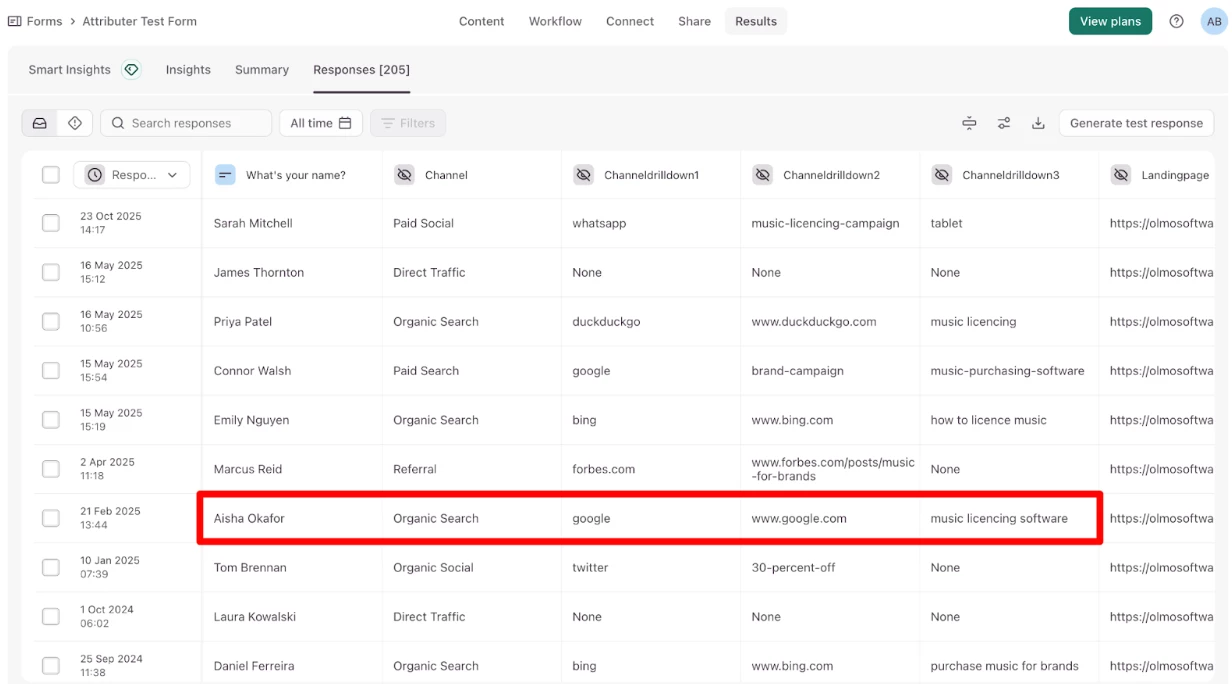
Check out our video guide here:
Happy to answer questions if anyone wants to dig into the setup.
Aaron